
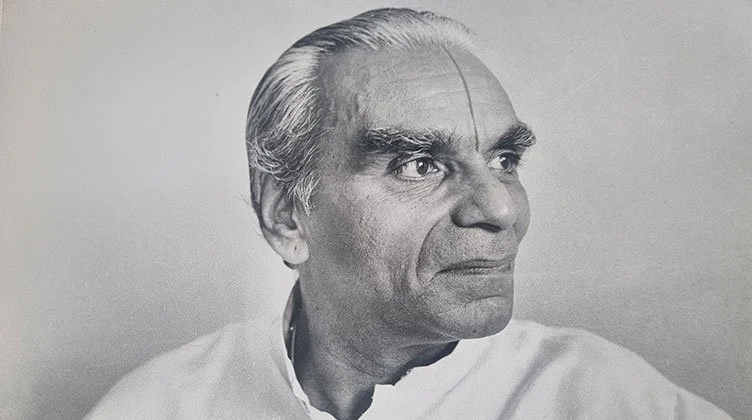
“Yoga does not just change the way we see things; it transforms the person who sees." Light on Life. BKS Iyengar
What is Iyengar Yoga?
Iyengar yoga is one of the most widely practised and rigorously taught styles of yoga in the world — and once you understand what makes it different, it's easy to see why.
It starts with a remarkable teacher
B.K.S. Iyengar was born in India in 1918 and spent over 75 years developing and refining his approach to yoga. He didn't just teach poses — he systematised the entire practice, creating a method so precise, so well-documented, and so deeply connected to human anatomy that it became a global standard.
He taught everyone: athletes, musicians, politicians, people with serious injuries, elderly beginners. His conviction was simple — yoga is for every body, without exception.
What makes it different?
Alignment over movement. Each pose is explored carefully, with attention to exactly how the body is positioned — which muscles are working, where the weight is, how the breath moves. This isn't about being rigid; it's about being intelligent. When your body is well-aligned, the pose does its real work. But the practice incorporates flowing vinyasa as well as slower, attentive practice. In short we practice in many different ways.
Props as tools, not shortcuts. Blocks, straps, blankets, bolsters, and wall ropes aren't there because students can't manage without them. They're there because they allow every student — regardless of flexibility, strength, age, or physical limitation — to experience the full effect of a pose safely. In Iyengar yoga, using a prop is a sign of good teaching, not weakness.
Progression that means something. The Iyengar method has a clearly structured syllabus. As a student, you build from the ground up — standing poses first, then seated poses, forward bends, twists, inversions, and backbends and arm balances — each layer preparing your body and mind for the next. You never feel like you're starting from scratch; you feel like you're building something.
Teachers who are genuinely trained. Becoming a Certified Iyengar Yoga Teacher (CIYT) takes years. The certification process involves extensive examination of both personal practice and teaching ability, assessed by senior teachers trained in the tradition. There are no shortcuts. When you walk into a class taught by a CIYT, you're in the hands of someone who has been held to one of the highest standards.